So you have followed the last few lessons and you feel confident that you can keep your subjects sharp and you can adjust the exposure using exposure compensation. If you only want to take slightly more control of your compact, then you’re there, and your pictures will be much better. Last week though, I said I would show you an alternative way of adjusting exposure. For some of you that will be useful because you are just interested in more control. Perhaps the exposure compensation control isn’t a feature of your camera, or perhaps it’s incredibly hard to use or find. Your alternative is to learn about “metering modes”.
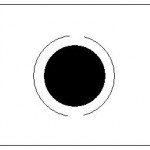
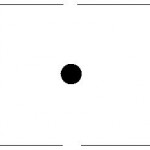
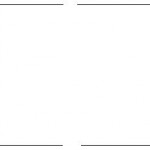
Remember that not all compacts will have all functions, but if your compact has metering modes they might include the following. Their symbols might be a variation of these:
- Evaluative or Matrix mode

- Centre weighted or Partial Metering mode
This all sounds a bit complex, and you are probably wondering how it links to exposure. Well putting it simply, your camera will be in “evaluative” mode by default. When your camera looks at a picture, it splits its sensor into an imaginary grid of sections. (often 35). It looks at the brightness across all of them, and tries to make them spread evenly between the brightest, (near white), and the darkest, (near black).
If the scene has a person in it, and the camera fails to prioritise the brightness of that grid section, then the face would be too dark or too light. If there was a sky behind filling half the sections, then the camera will tone down the overall brightness to keep the average brightness from being too high.
In the picture above the girl’s face may be the most precious thing in the universe for you, but to the camera it is just about one percent of its sensor surface and not even a whole grid section. If its intelligent programming spots that this is a person, then it might prioritise that grid section, if not then tough cheese. (Most cameras still get this wrong a lot of the time).
This is where spot metering and to a lesser extent, centre-weighted metering come in. If you switch to these modes, you tell the camera precisely which section or sections of the grid to treat as a priority. It will then set the brightness based on what is at that section.
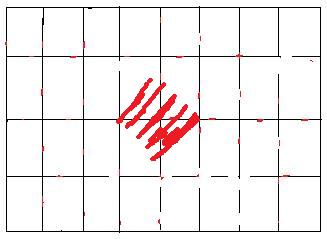
In the following centre-weighted, all sections are used but the red, centre ones carry more importance than the outside ones.
This means, that in spot mode, you simply hold the centre focus point over the object you need to be well exposed (a face perhaps), and the camera will meter from that section alone in spot mode, or it will prioritise that general area in centre weighted mode. This will ensure that the object you focussed on gets the right brightness and detail regardless of the rest of the scene.
If I was just getting to grips with my compact, and it had all 3 modes, I would simply use evaluative or spot mode. Choose spot mode when the exposure is wrong in its default evaluative mode, select the focus point, and that will fix your exposure. A bit more complex than the simple exposure compensation, but for many people depending on the camera, this is more suitable.

.jpg "from-the-whinhill")
.jpg "poster-front")
.jpg "poster-back")
.jpg "ratnadevi")


.jpg "p1000532")
.jpg "p1000533")
.jpg "Catherine and Gerry on Ben Dubh")
.jpg "Descending Ben Dubh in winter")
.jpg "Loch Lomond from Ben Dubh")

